2026-ongoingThe Pipe
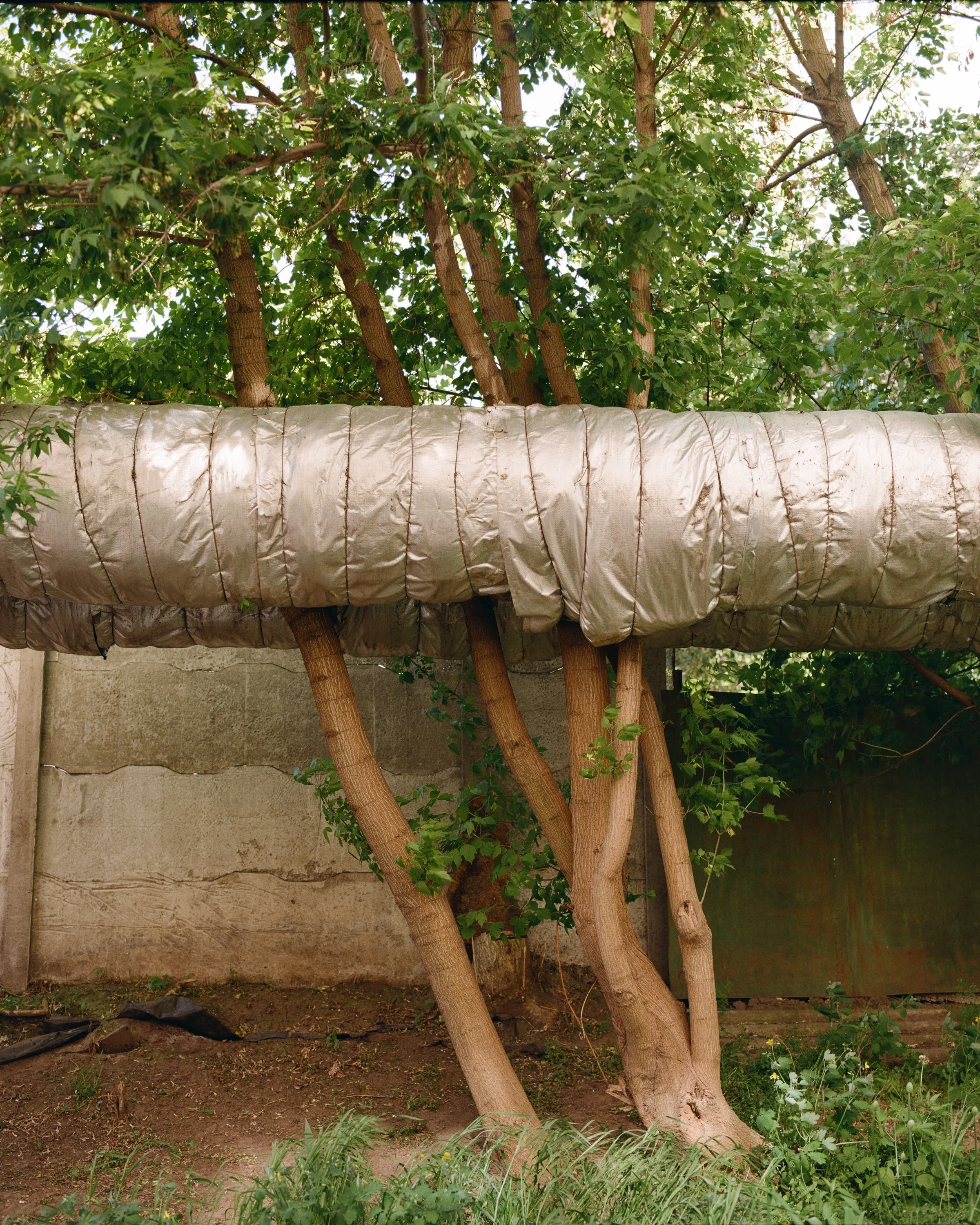
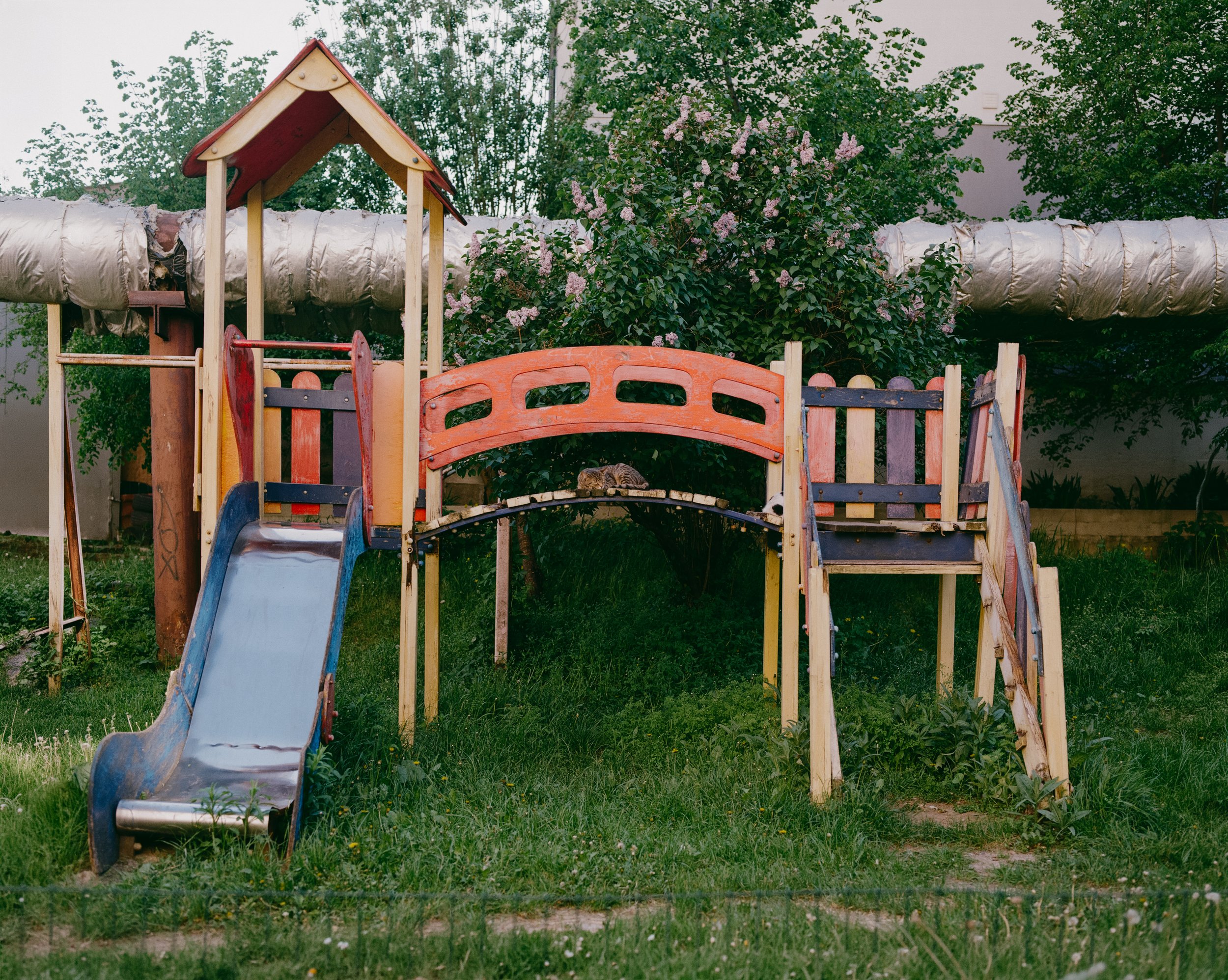
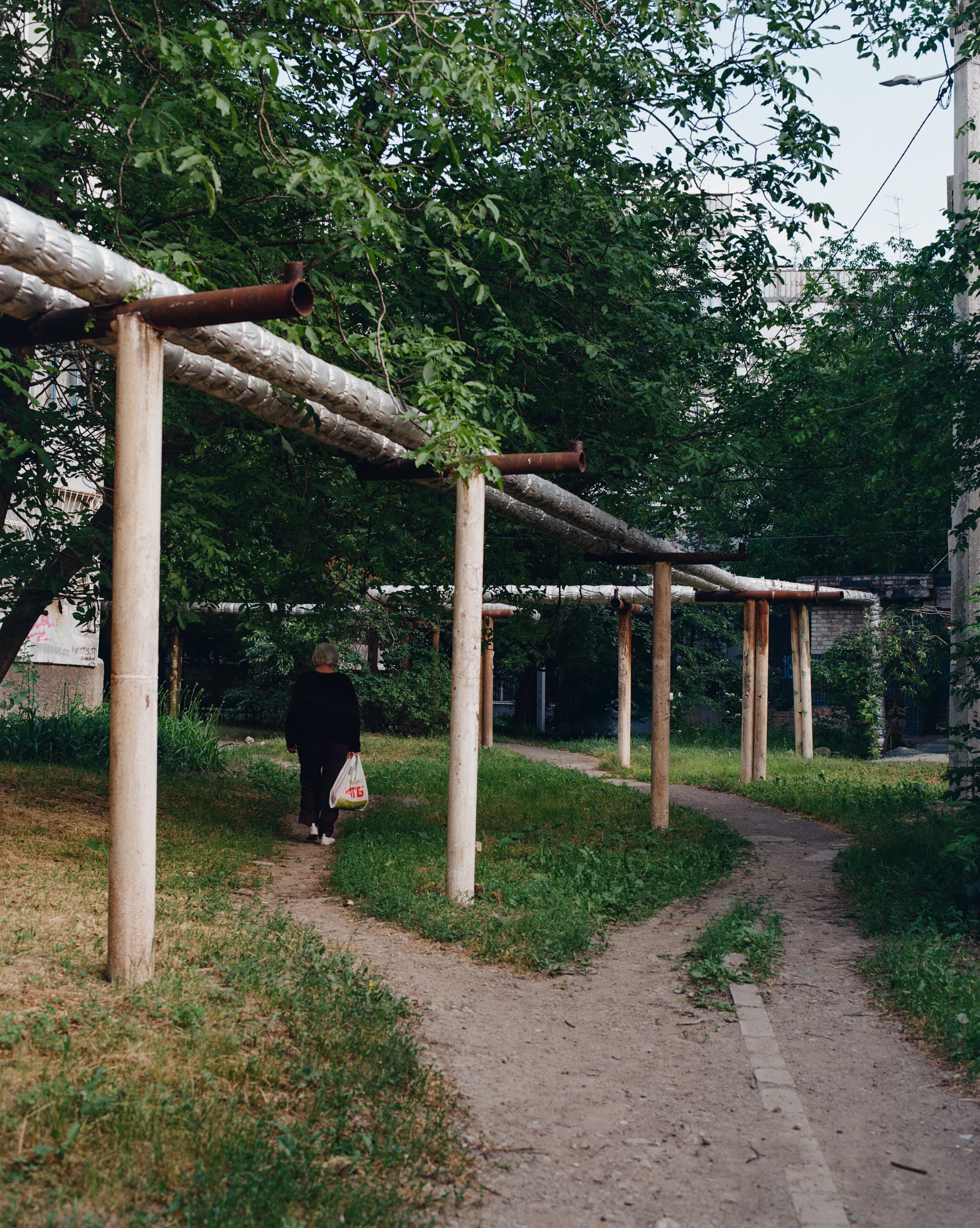
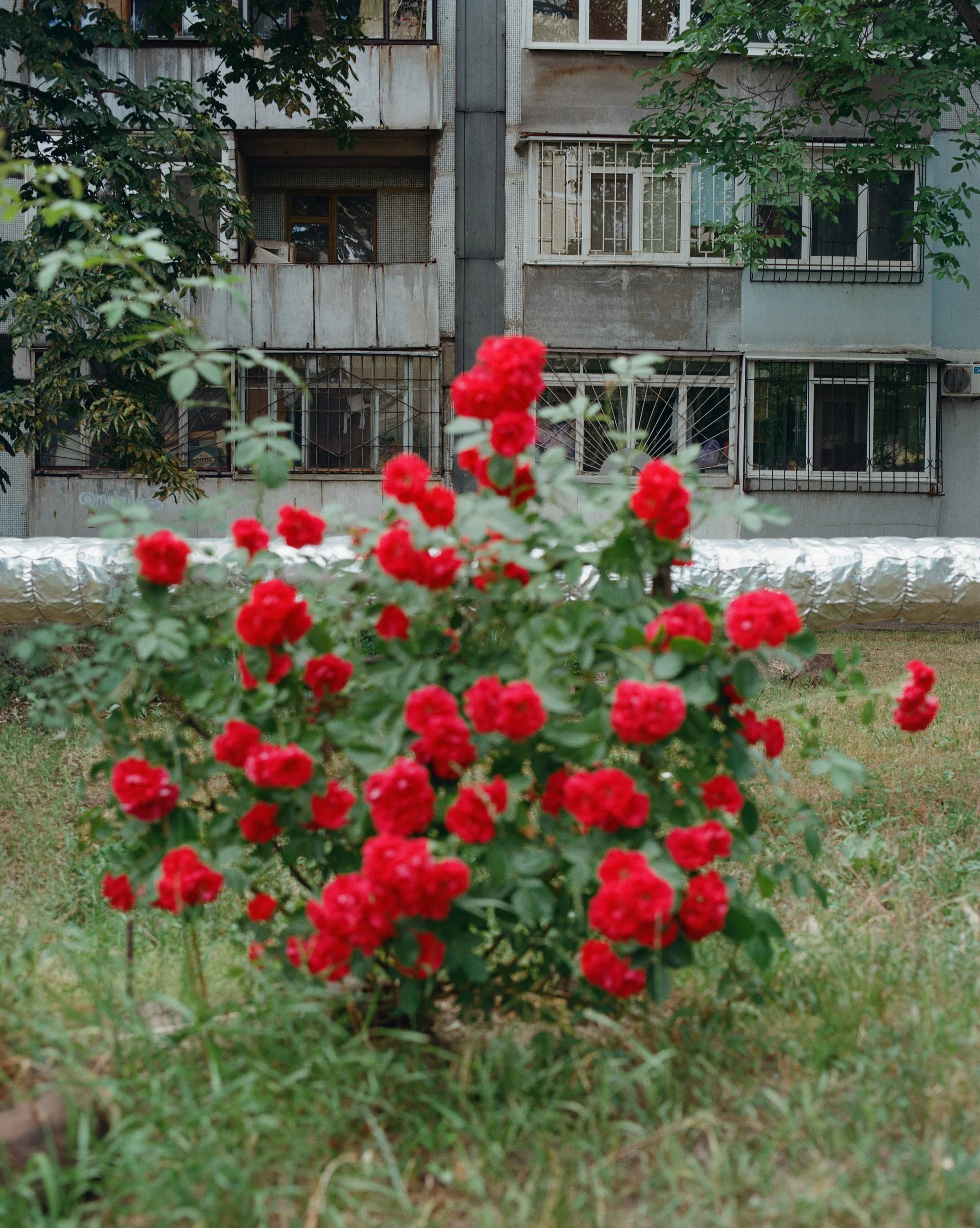
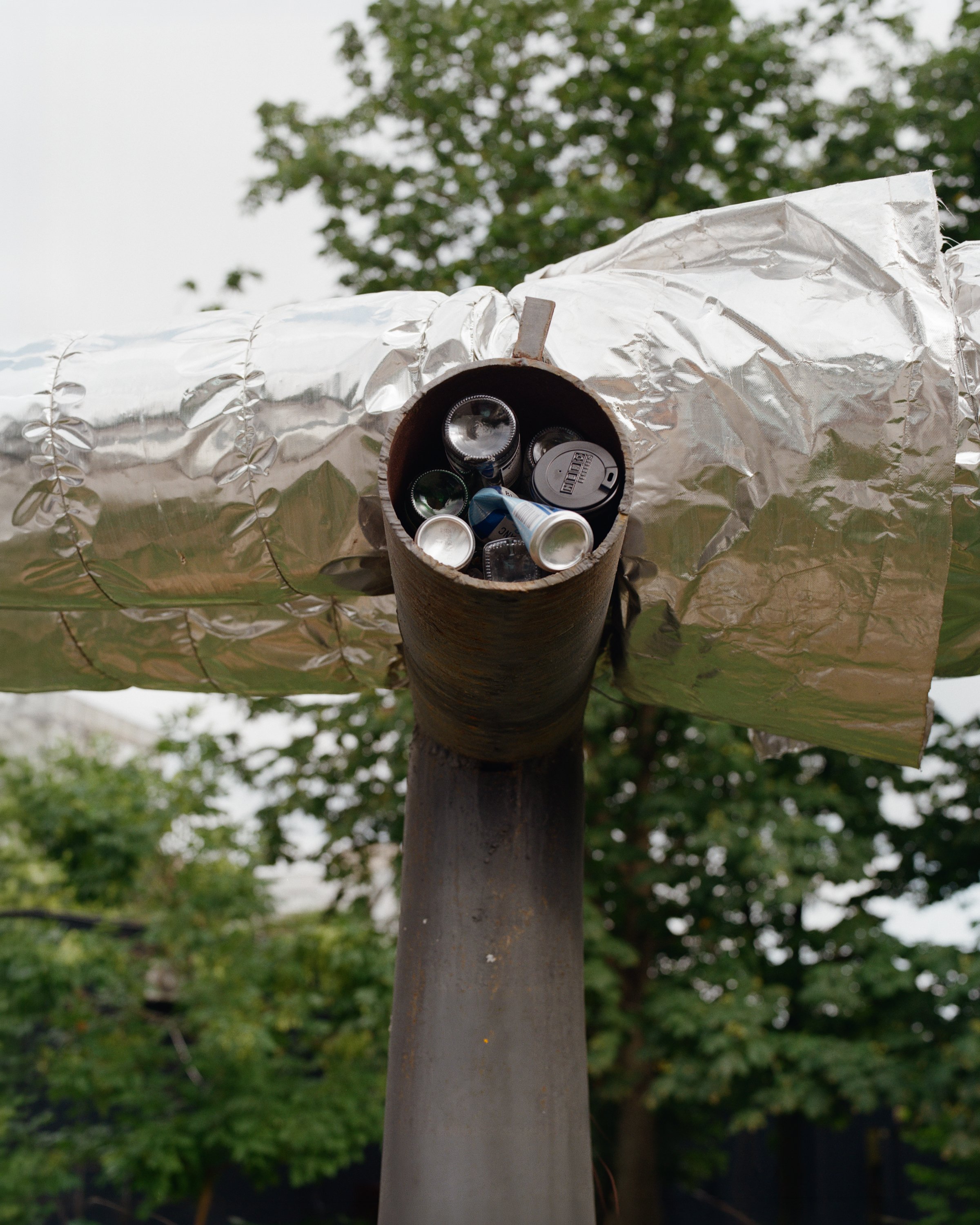
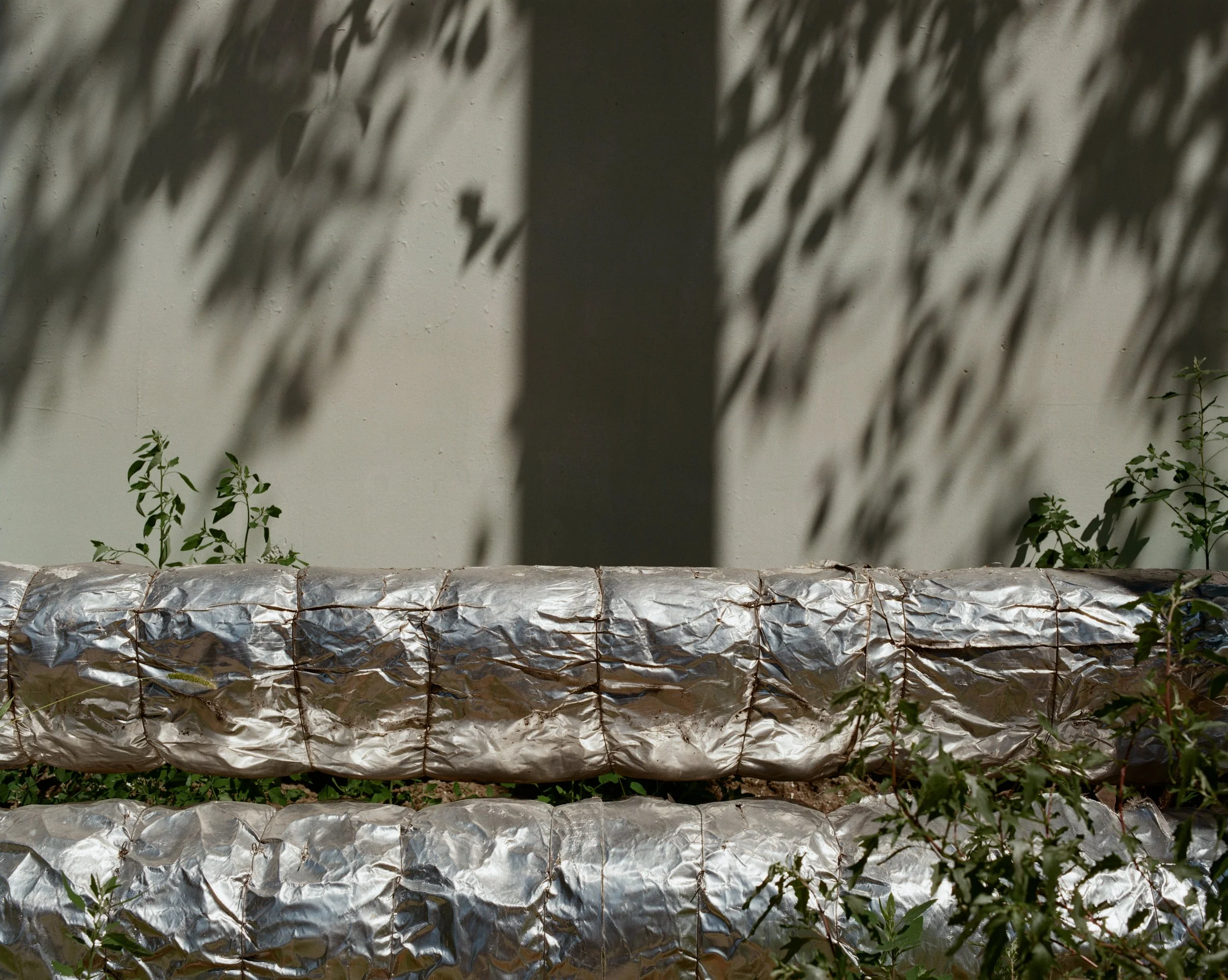
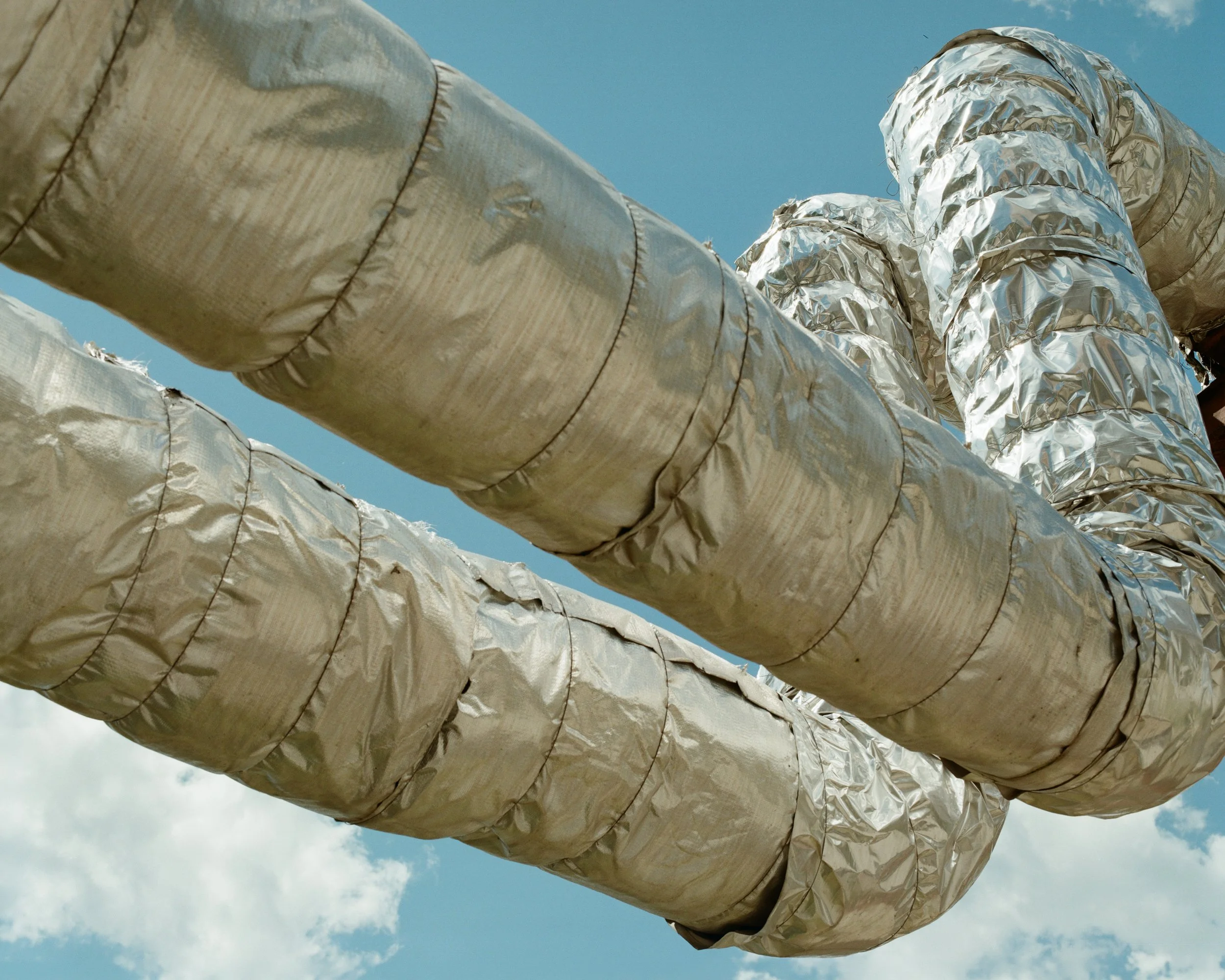
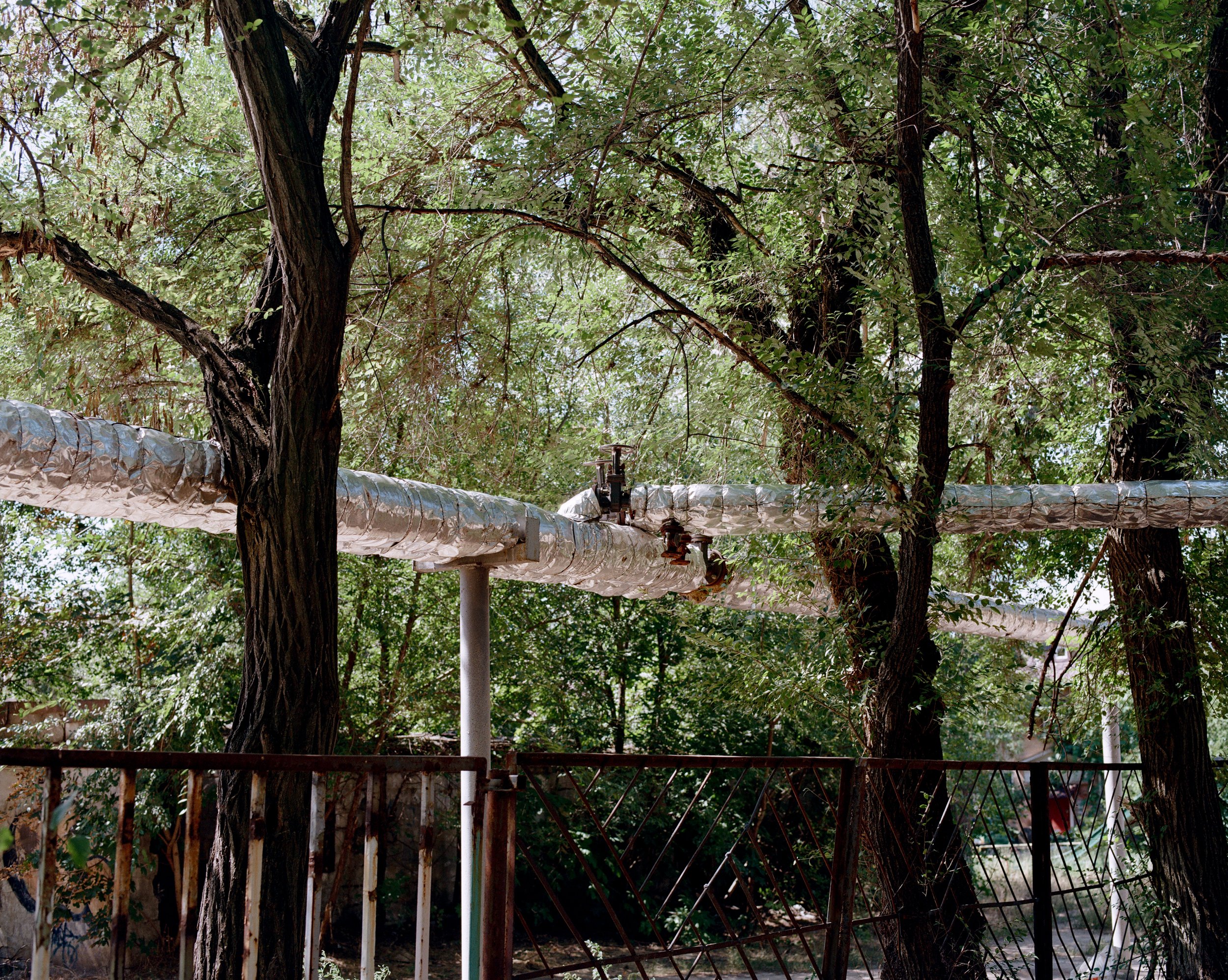
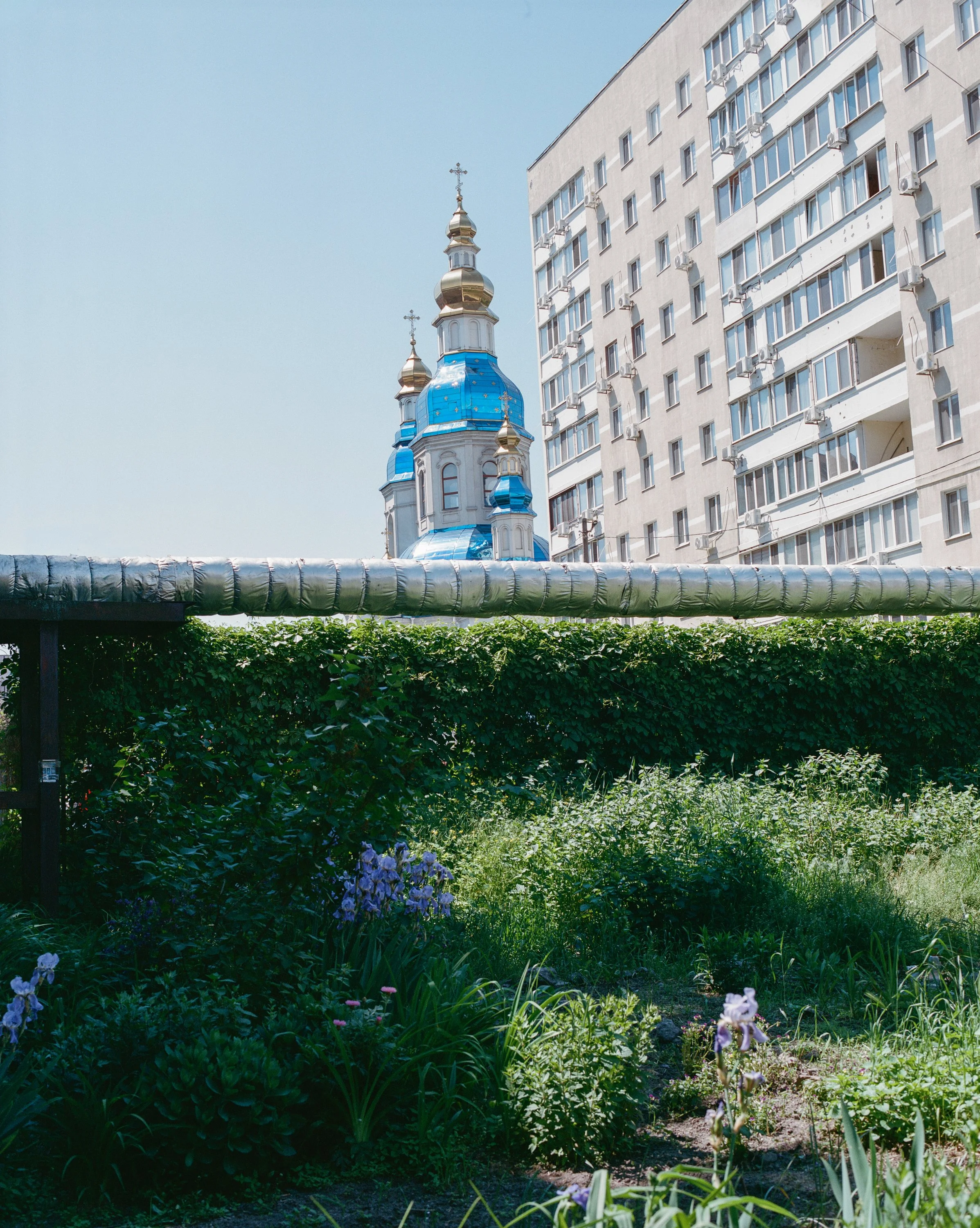
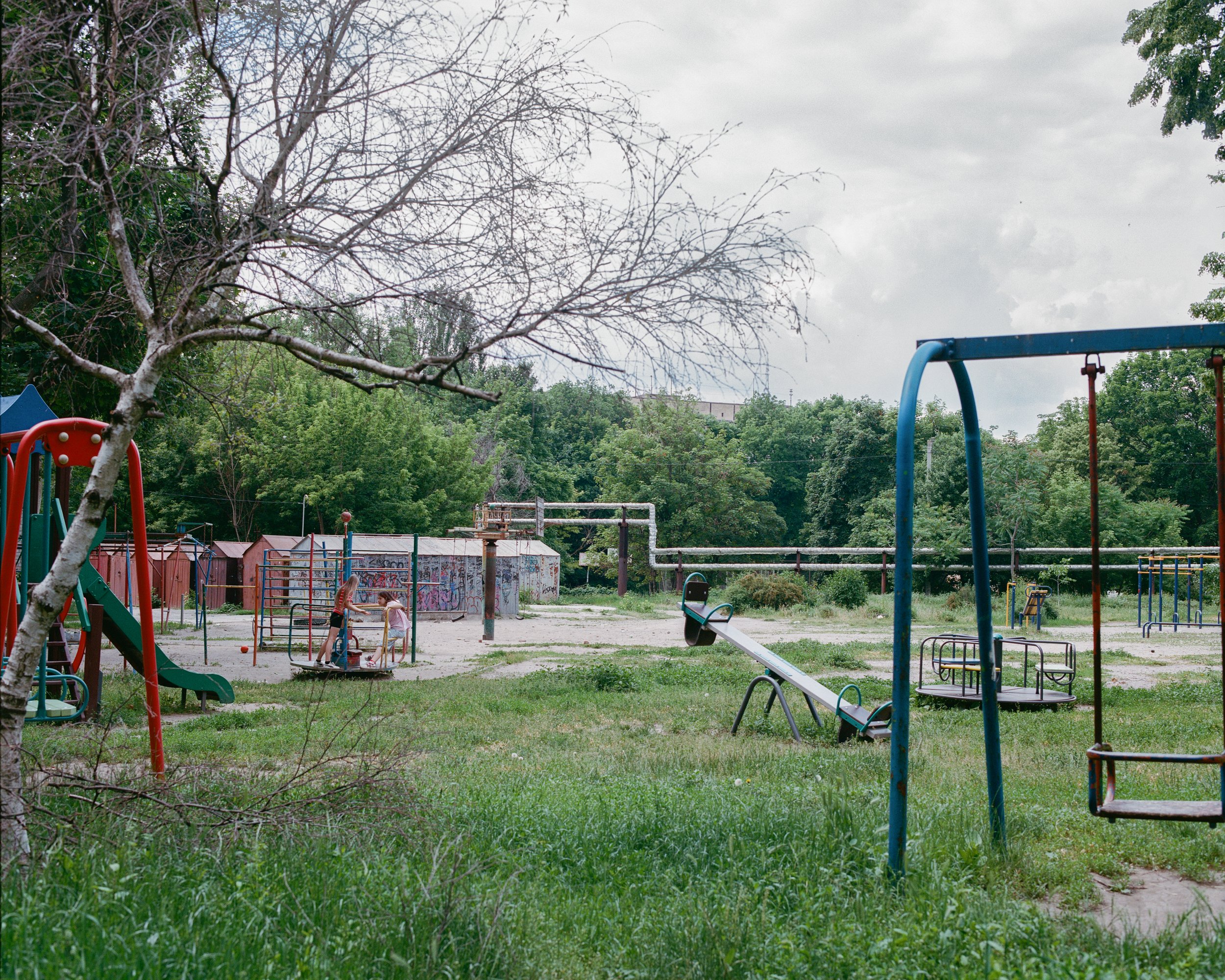
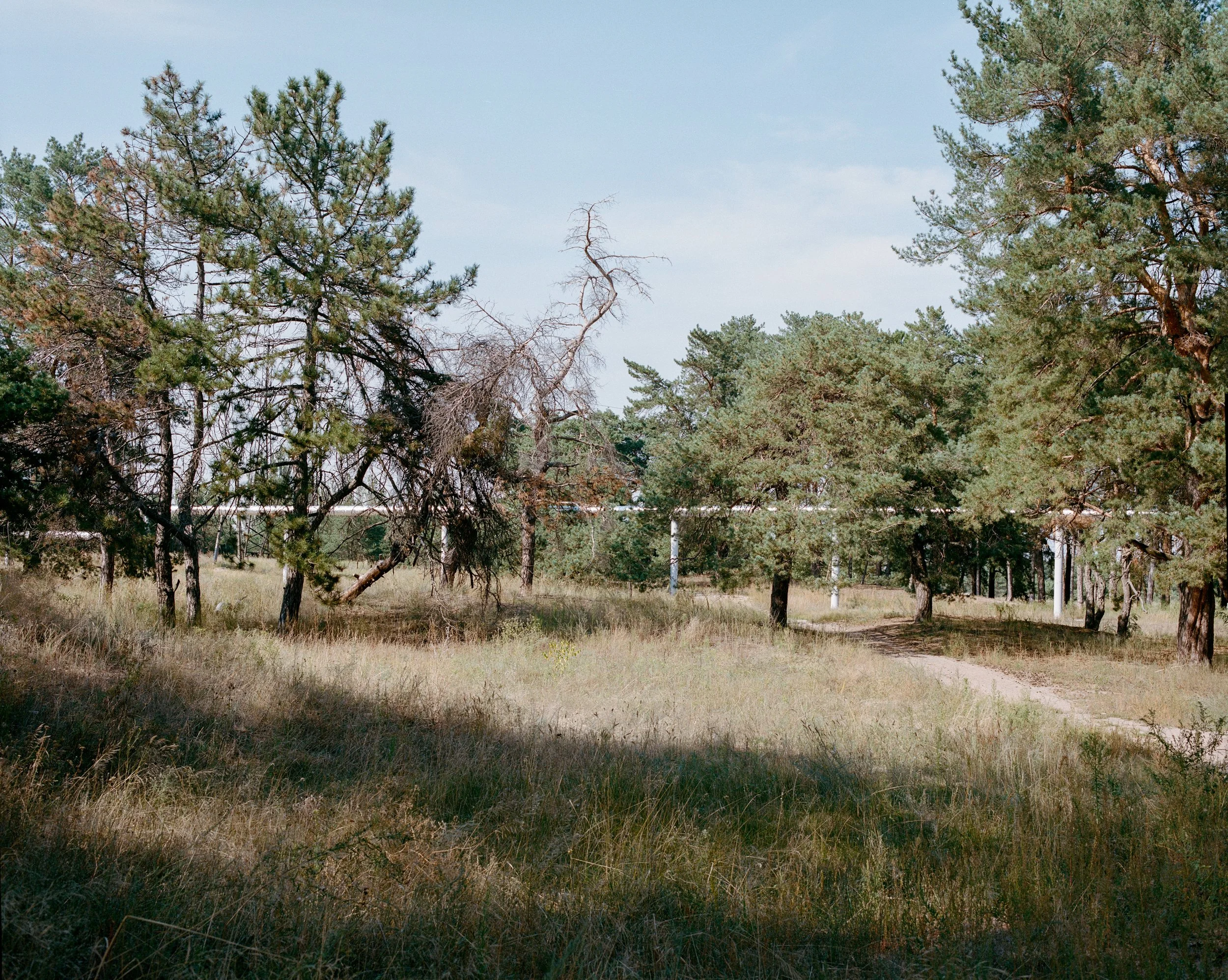
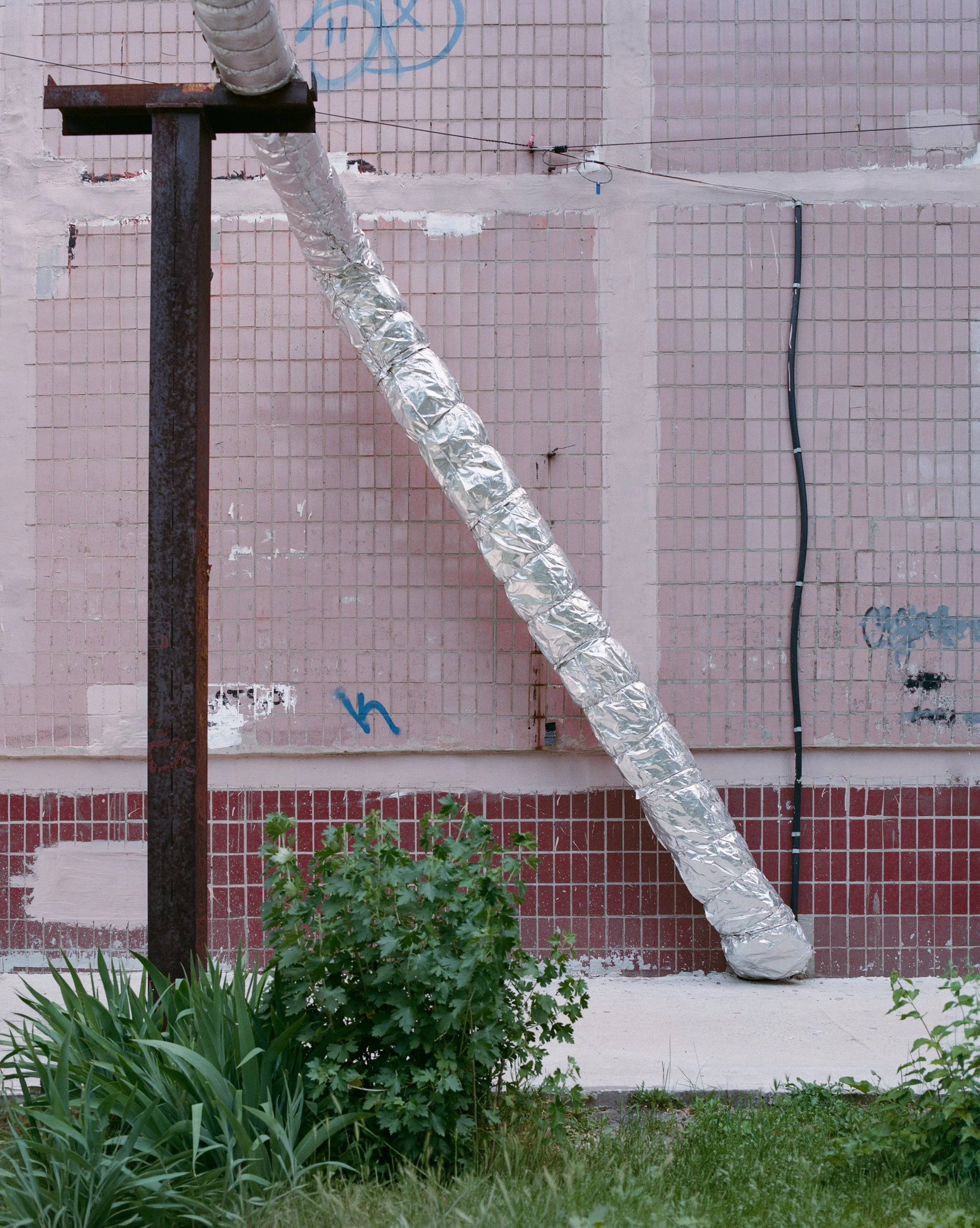
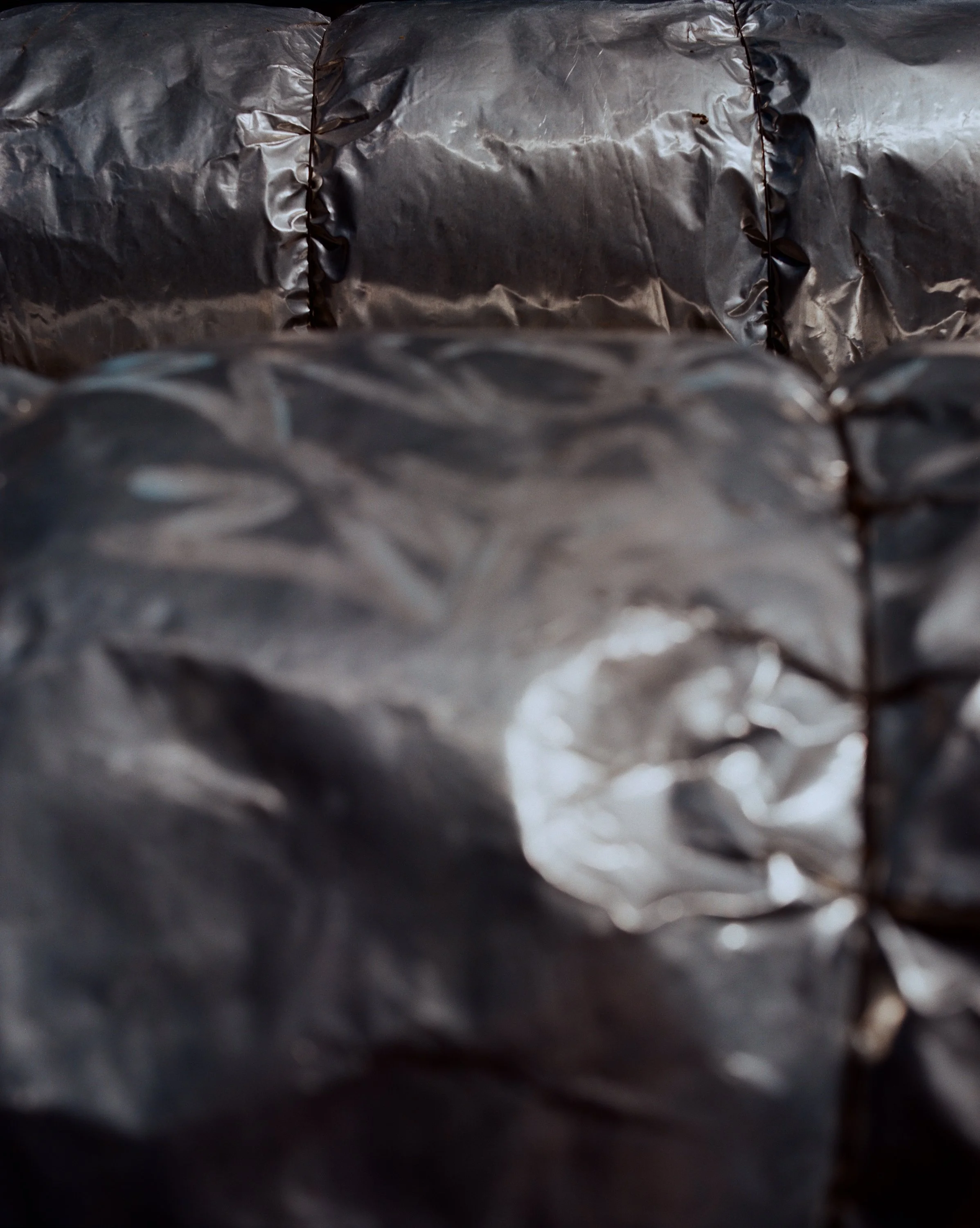
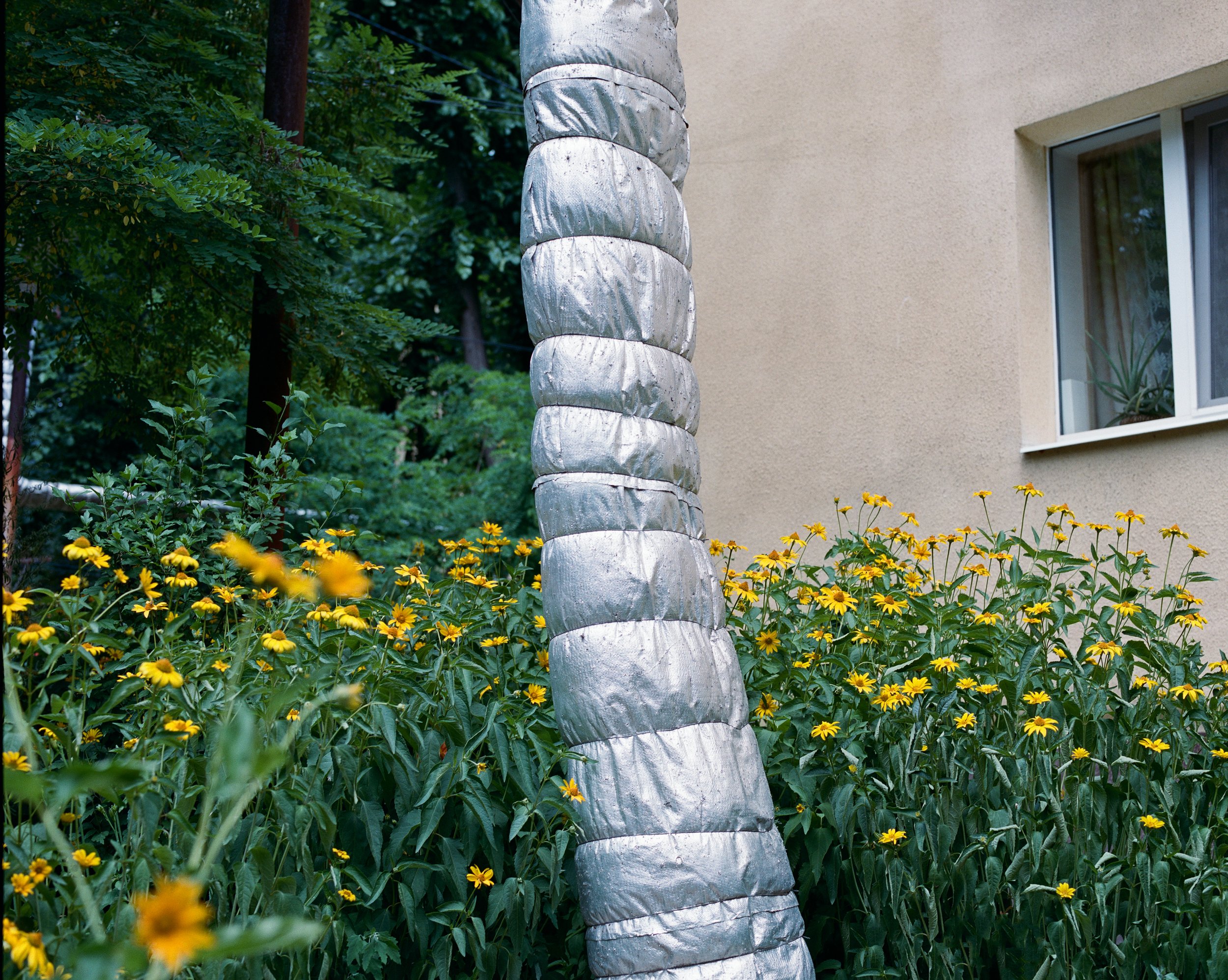
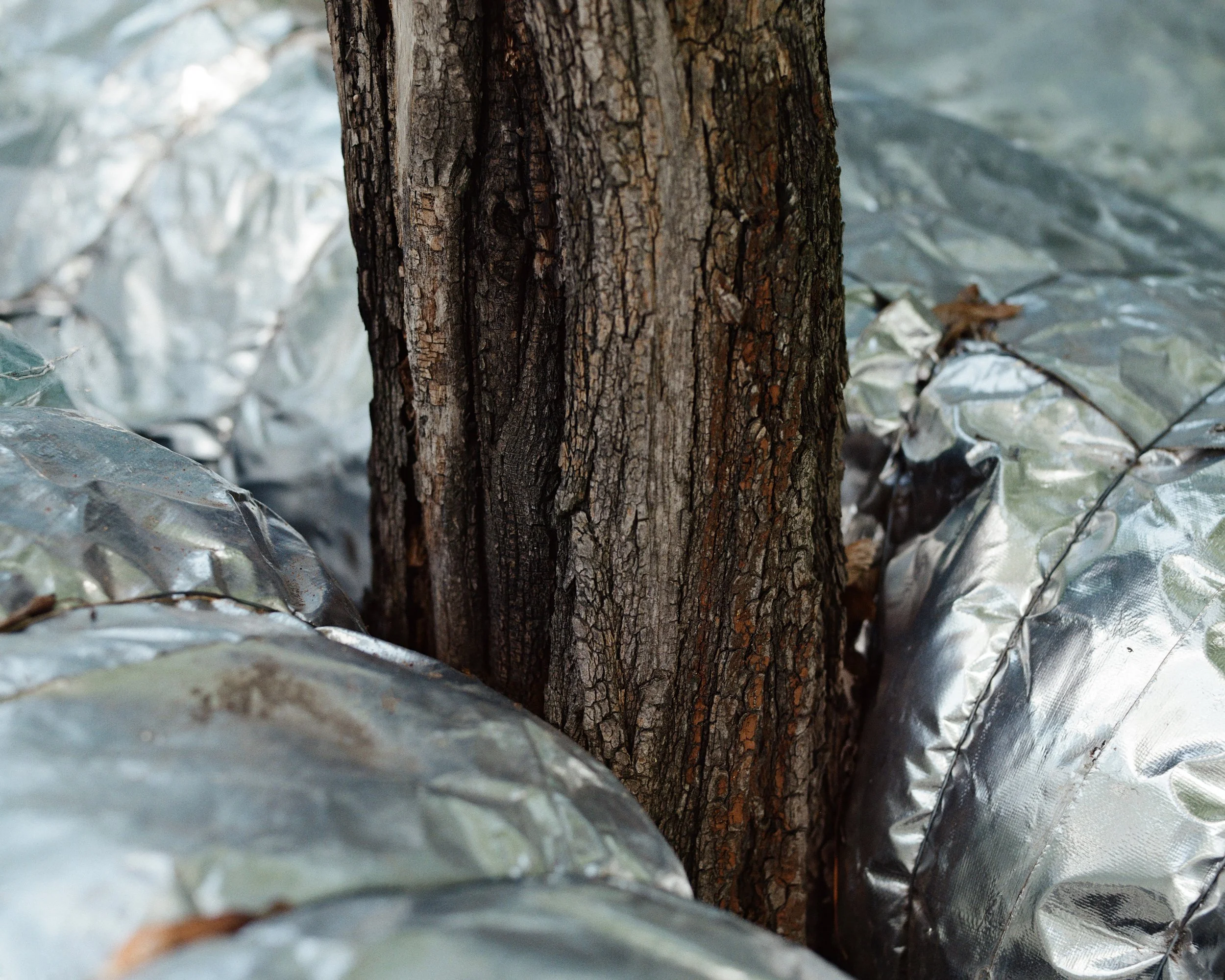
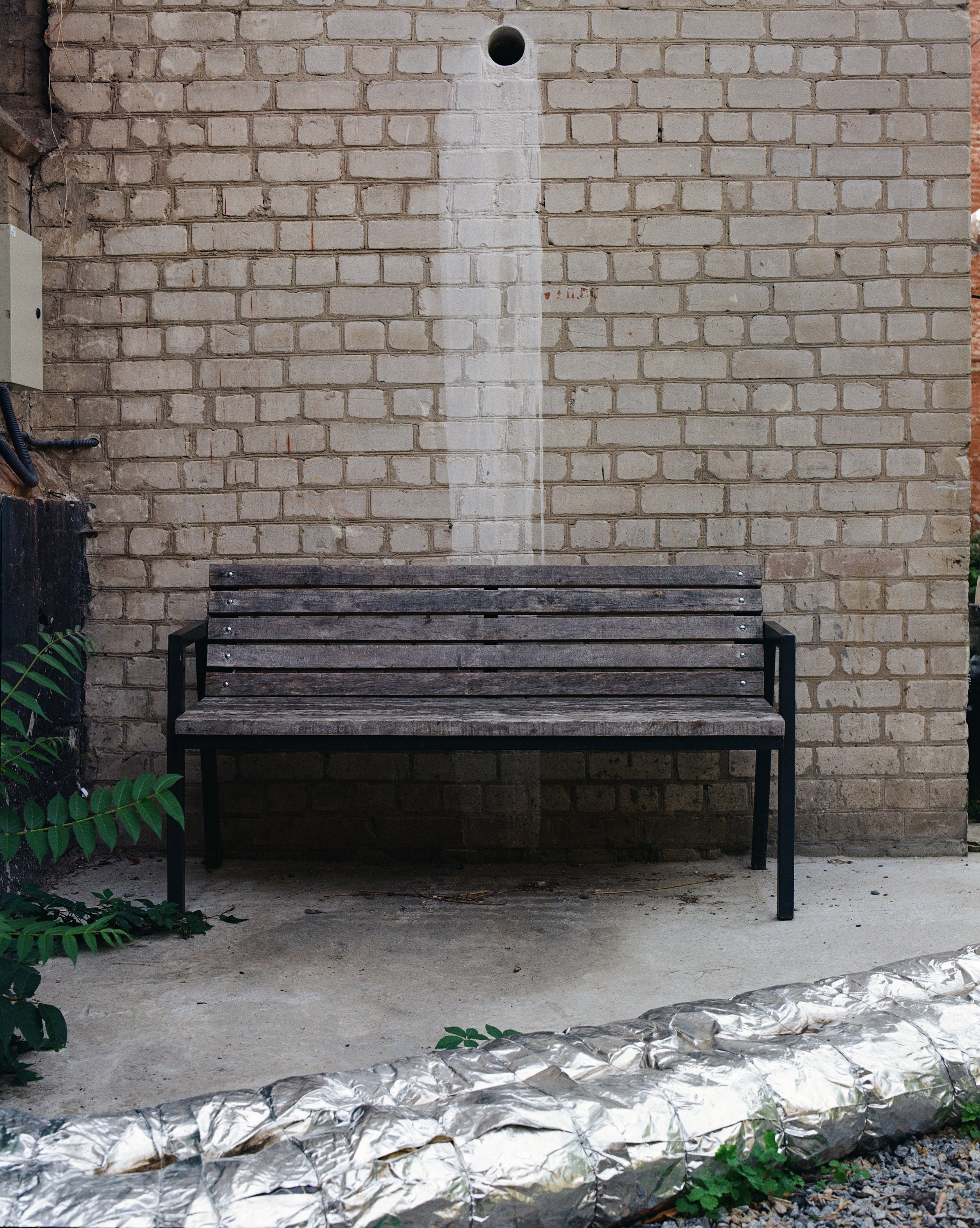
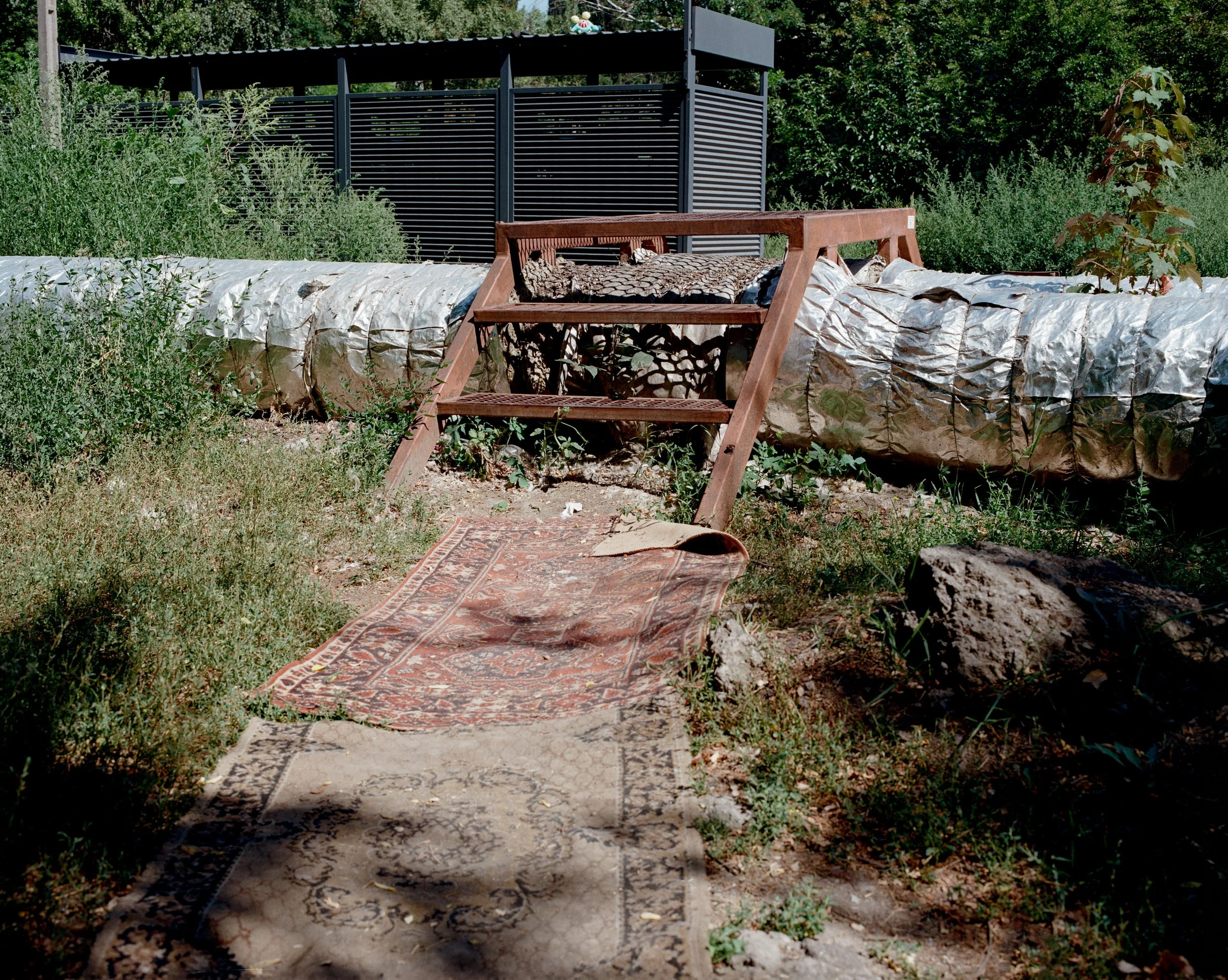
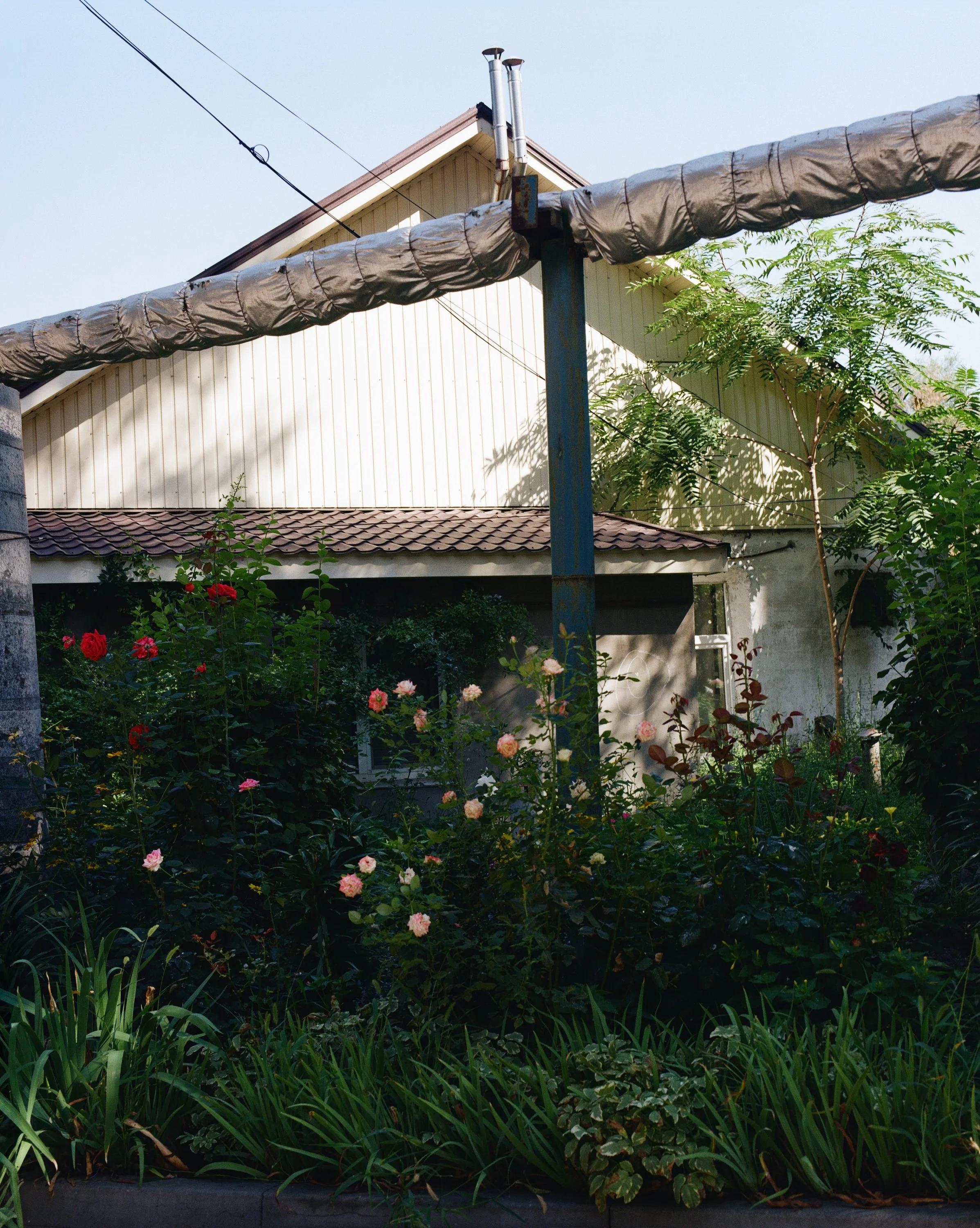
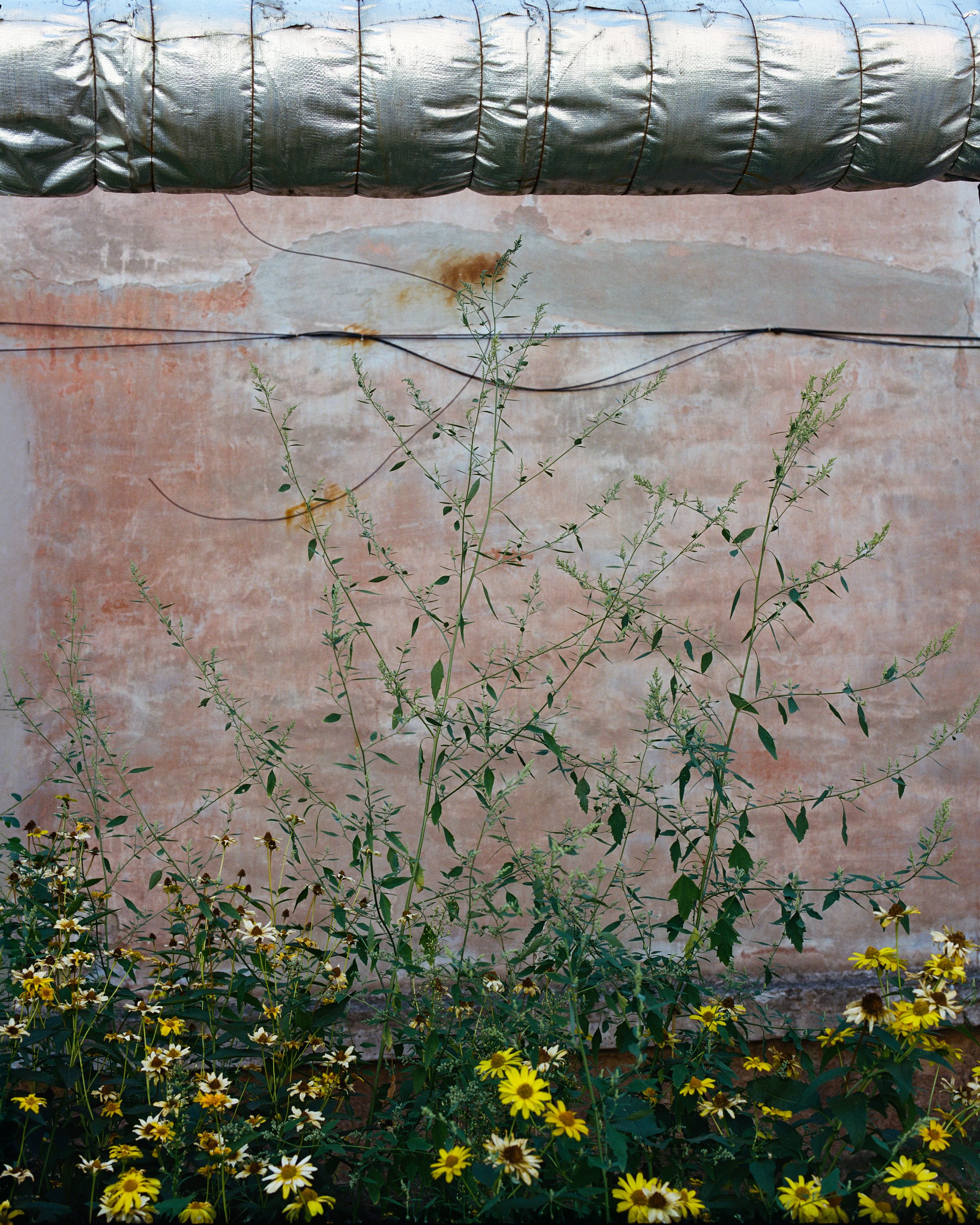
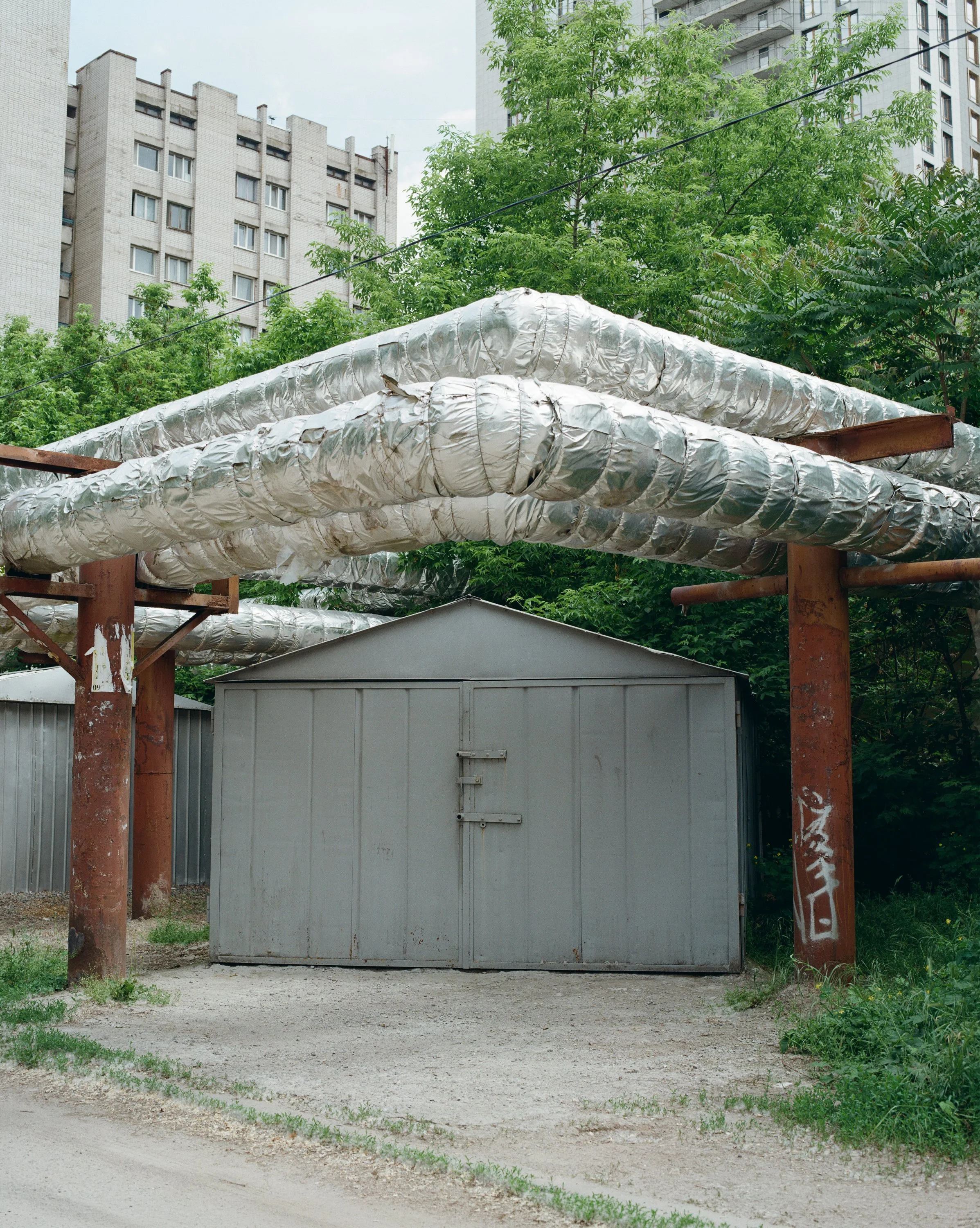
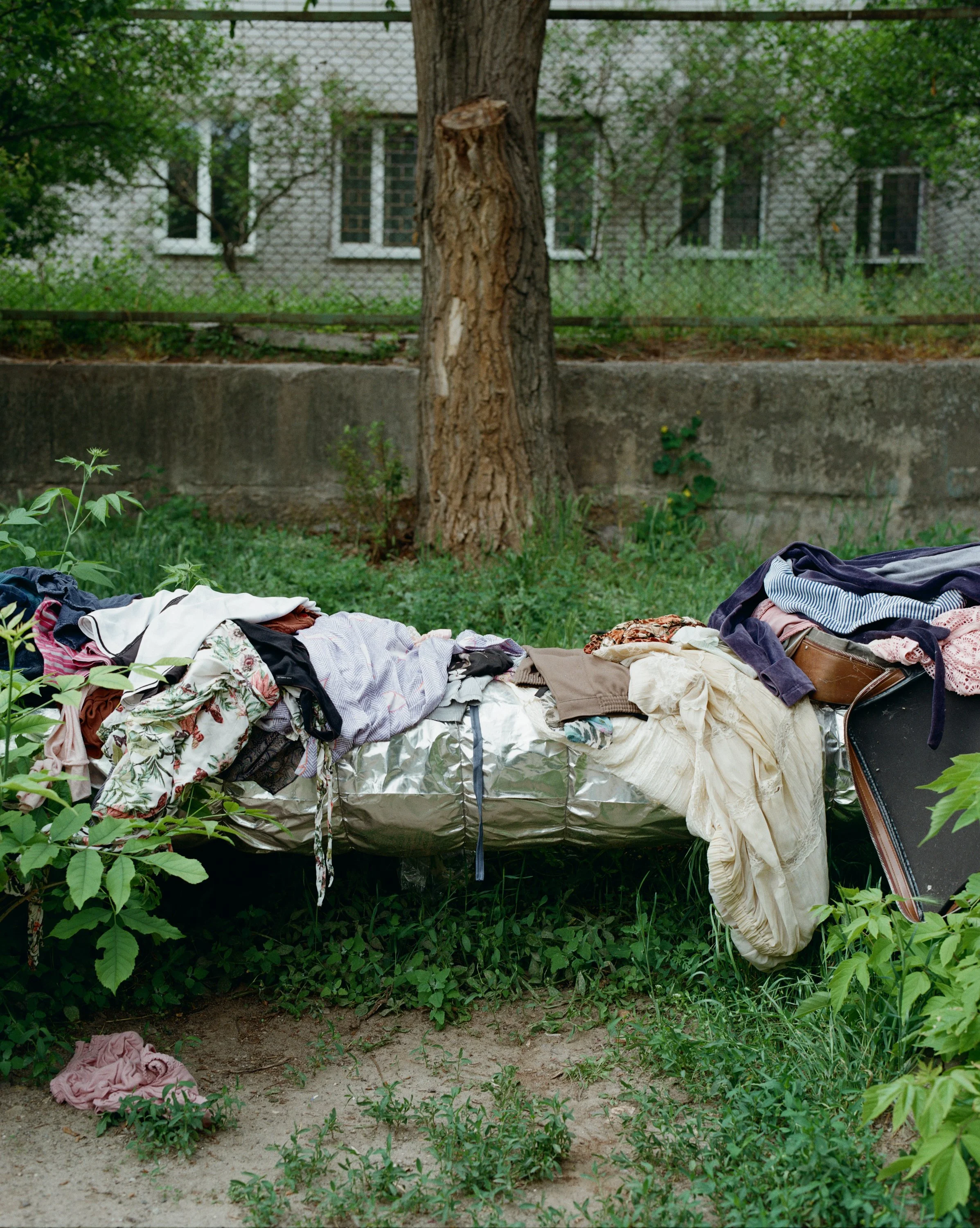
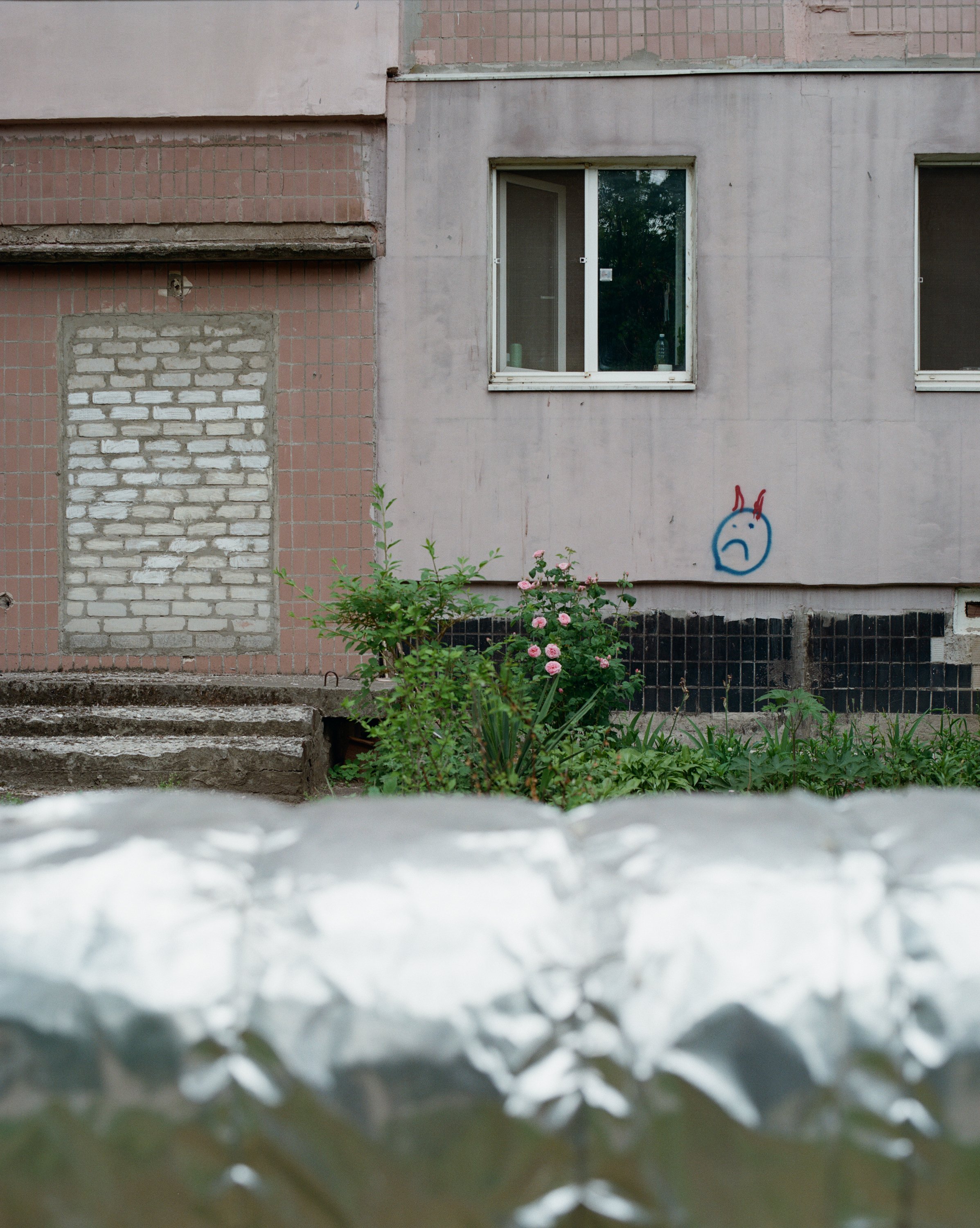
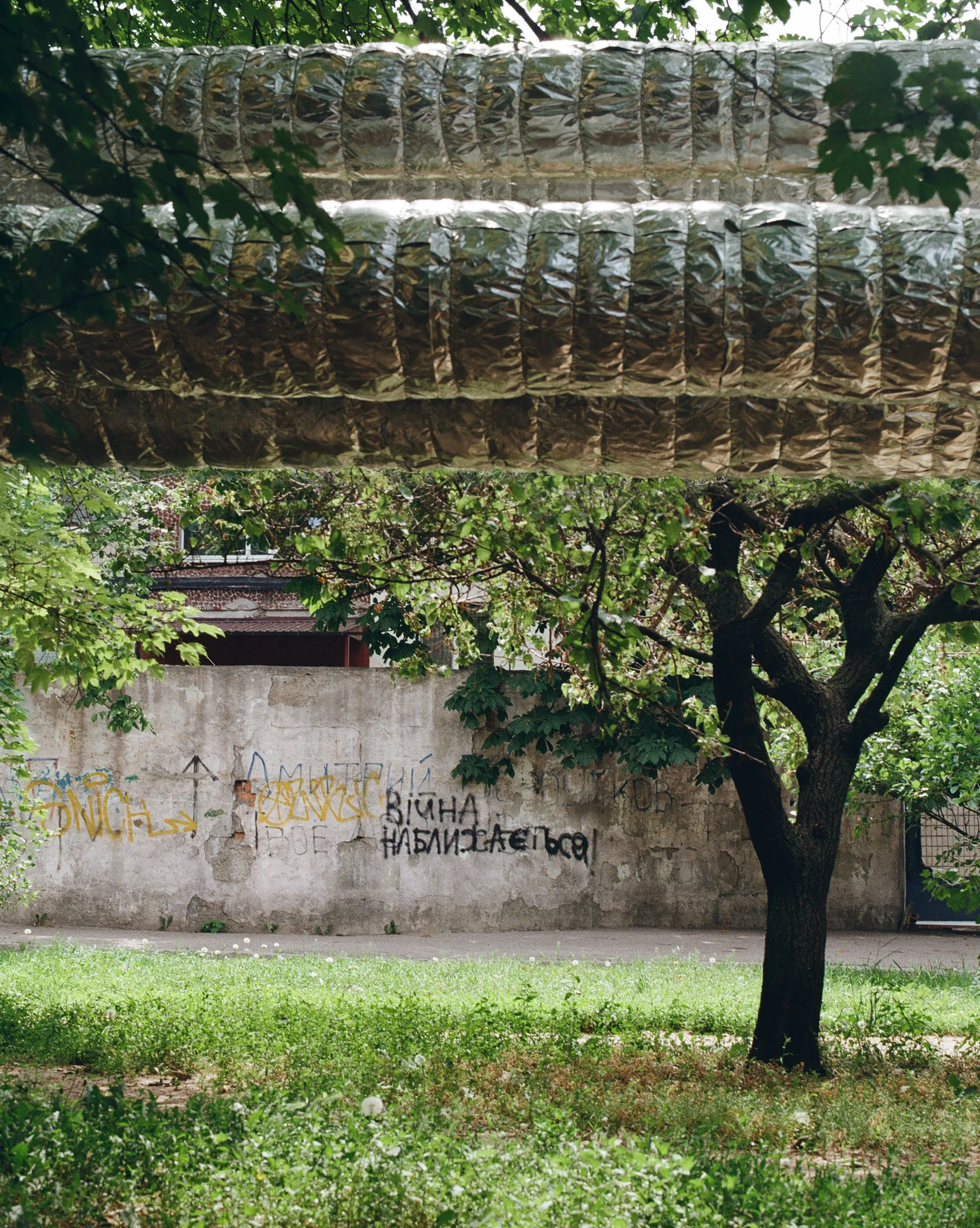
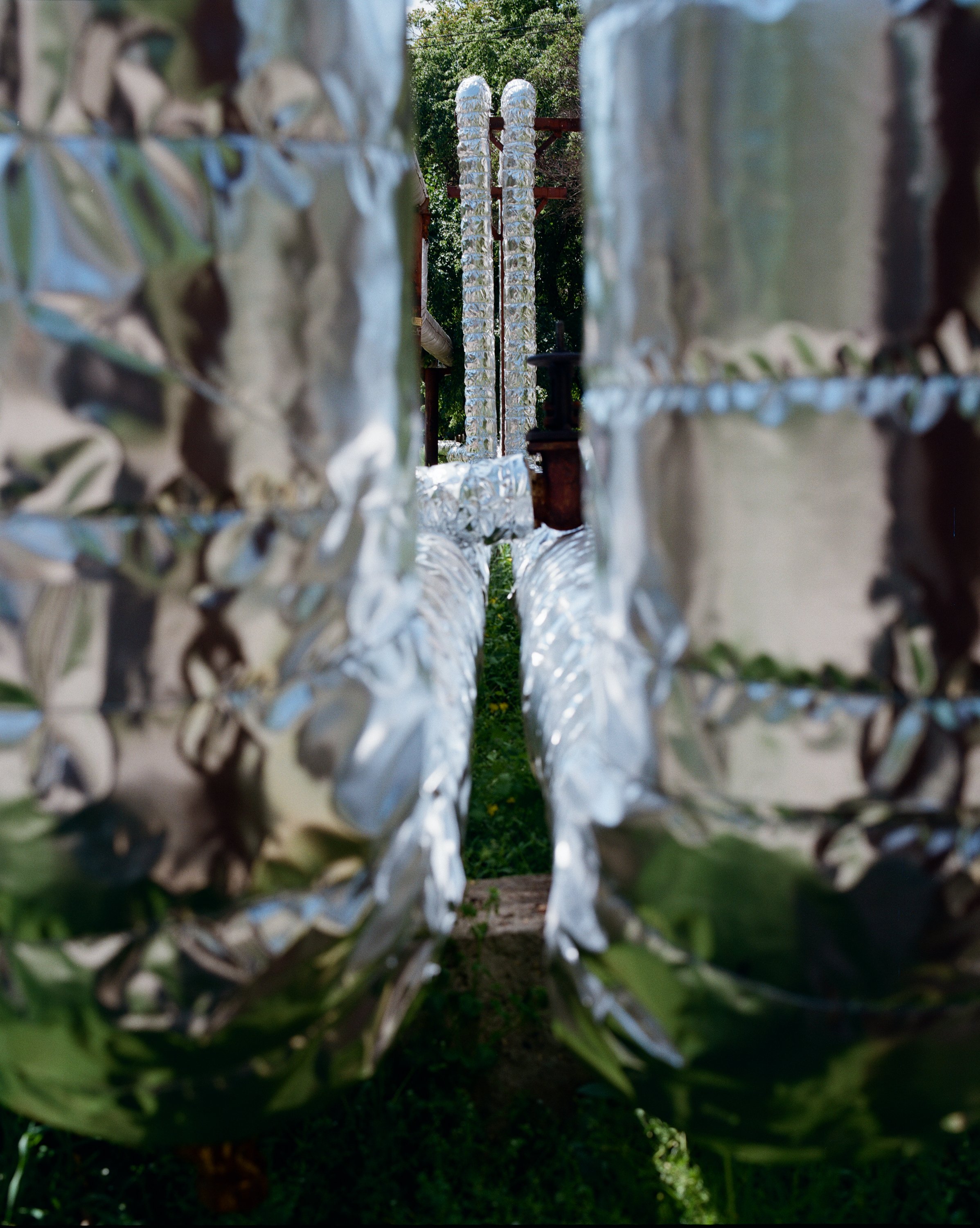
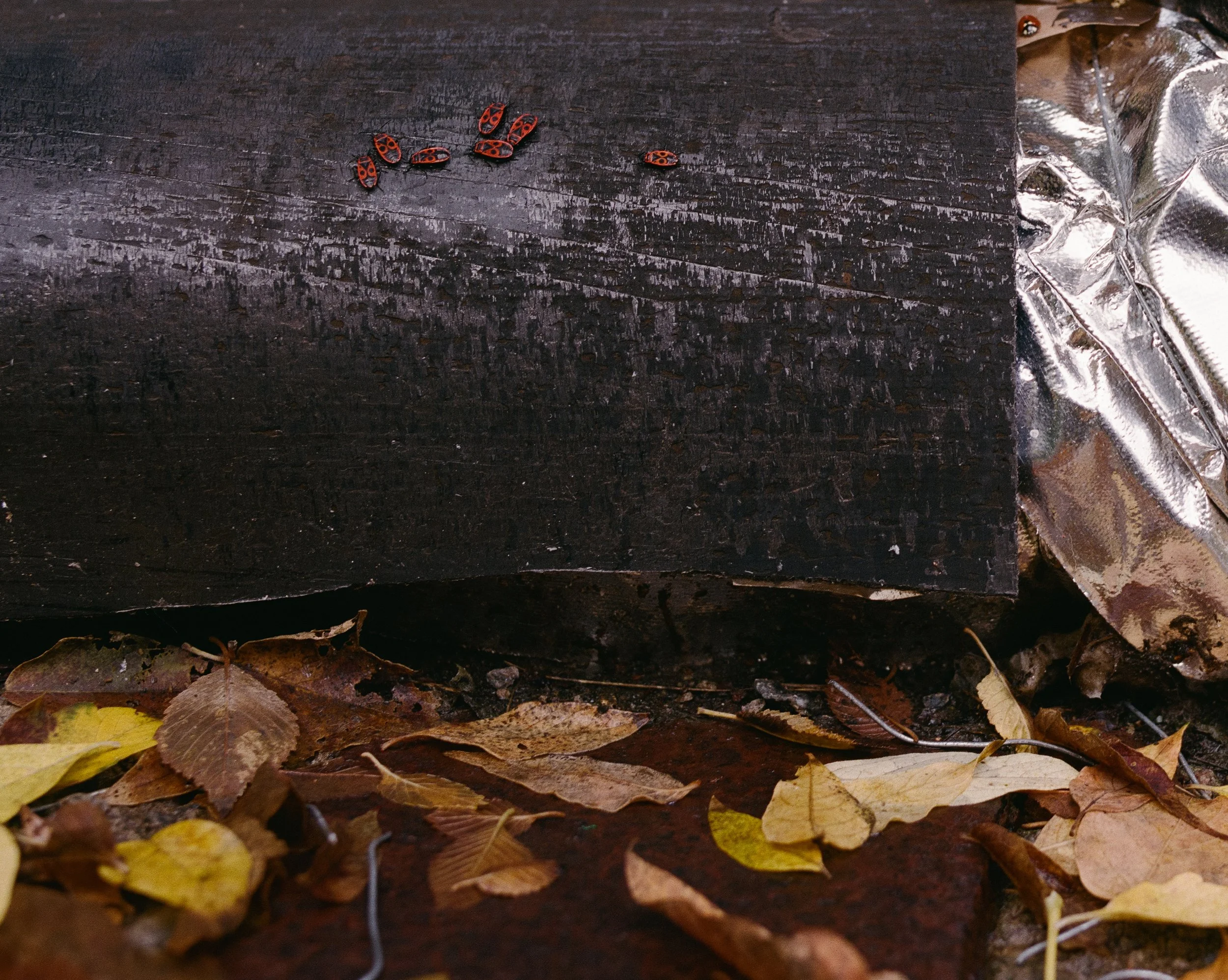
The Pipe is a photographic project about the above-ground heating networks that run through the residential districts of Dnipro, Ukraine. For six months, Udovenko has walked through the city’s housing estates, following these pipes as one might follow streets or rivers. She captured each moment in which the pipe met the city: bending around a tree, crossing a playground, dividing a parking lot, hovering over a path, or forcing a passer-by to duck or step across it.
District heating is not itself a Soviet invention, nor is it inherently obsolete. What is particular to the Soviet city is the scale at which centralized heating was integrated into mass housing and public infrastructure. Dnipro still lives inside much of this spatial logic. Its municipal heating utility operates around 1,350 kilometres of heat networks and supplies roughly 85 percent of the city’s housing stock. The visible pipes are fragments of a vast system of urban dependency.
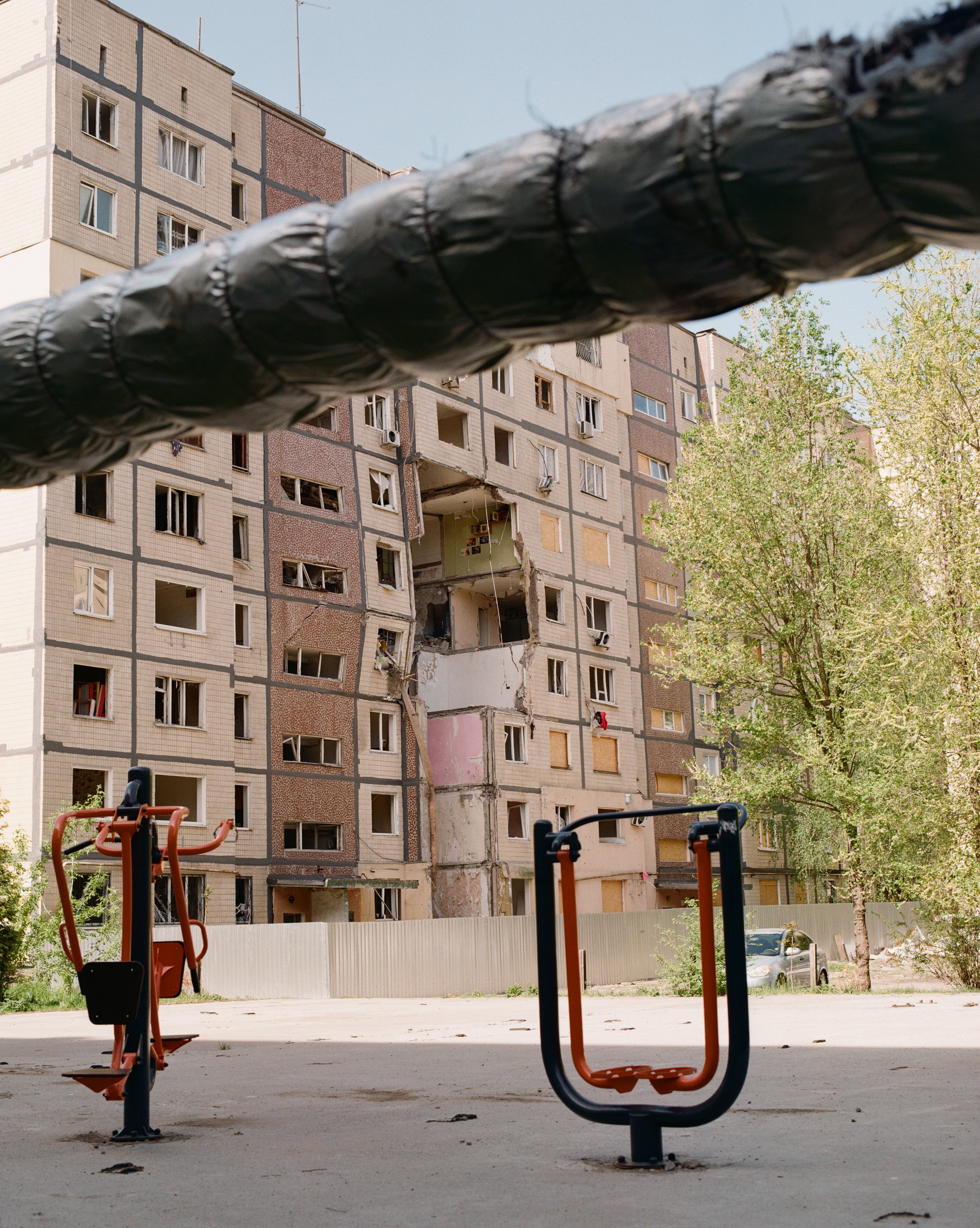
Urban anthropologist Deana Jovanović writes about district heating as a material form of the social contract between citizens and the state. In Ukraine today, this distinction has acquired a new urgency. As the country enters another winter under the threat of continued Russian attacks on energy infrastructure, the pipe can become an indicator of the condition of the city. The same object can shift from infrastructure to shell without changing its form.
The pipes also participate in the stigma attached to Soviet-built housing estates. These districts are often read as spaces inherited from a past Ukraine seeks to distance itself from: repetitive, inconvenient, visually outdated. But what does it mean to reject a landscape that millions of people still inhabit and depend on? If its material structure cannot simply be replaced, what forms of attention, attachment or reinterpretation become possible instead? Stigmatizing the given does not make everyday life within it more livable.
The Pipe approaches these structures neither as ruins nor as symbols to be celebrated. They are an unresolved condition of the present. They interrupt paths, frame courtyards and construct a second geometry over the city—a hydraulic drawing superimposed on domestic space. Above all, they make visible a relationship between the individual, the city, and the systems that allow a home to remain a home.